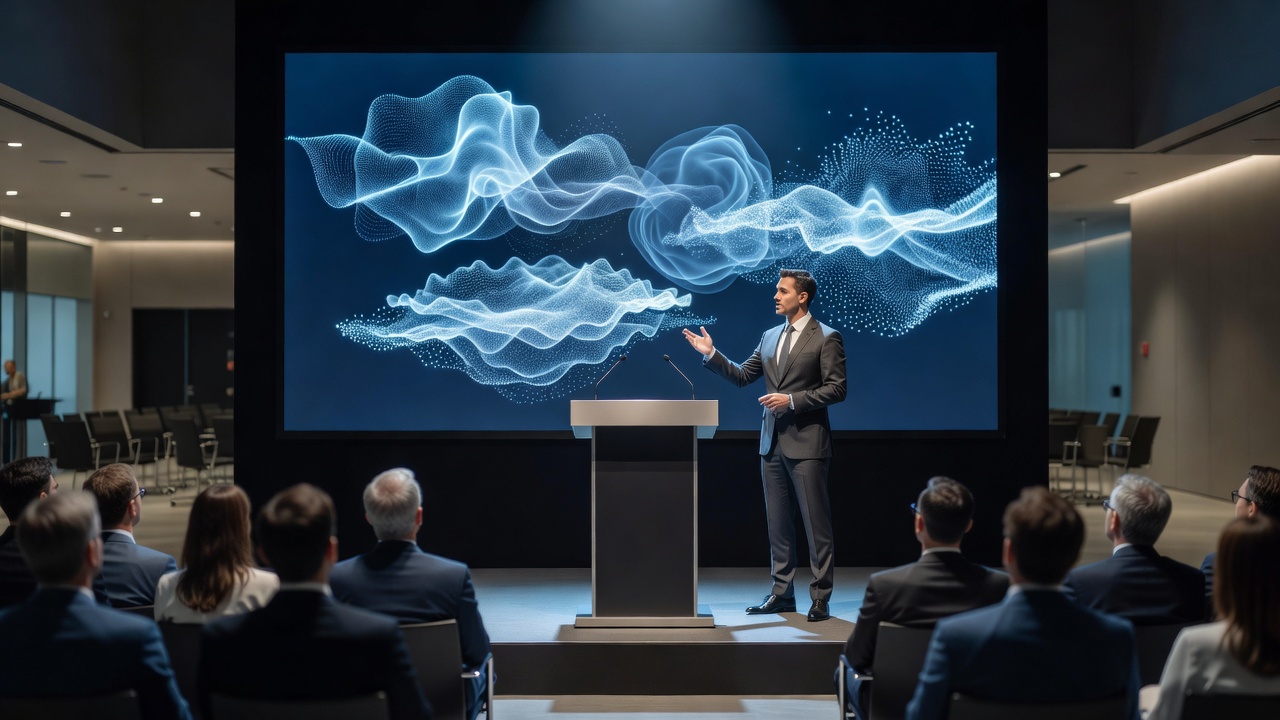
Bianca Schmitz · 1 September 2026
At the International Conference on Light Field Technologies in Berlin, researchers unveiled a compression algorithm achieving up to 85 percent data reduction for light field captures while maintaining high visual fidelity. The presentation addressed longstanding challenges in handling the large datasets generated by light field cameras, paving the way for broader practical use.
Technical Specifications of the Compression Method
The technique integrates sparse coding with convolutional neural networks to optimize encoding across angular and spatial dimensions. Lead author Dr. Hans Mueller reported compression ratios of 12:1 on average for 4K light field images, surpassing prior wavelet-based approaches by 4 decibels in peak signal-to-noise ratio. Experiments used diverse datasets from plenoptic cameras and camera arrays, verifying robustness under varying lighting and scene complexity. Real-time performance reached 30 frames per second on standard GPUs, with support for progressive decoding that enables low-bandwidth previews. Energy consumption metrics showed a 40 percent reduction compared to HEVC extensions, supporting sustainable deployment in portable devices.
Compatibility testing confirmed seamless integration with existing light field pipelines, including calibration and refocusing workflows. The team released benchmark results demonstrating artifact-free reconstruction at extreme ratios, validated through blind viewer studies with 150 participants.
Broader Implications for Light Field Adoption
Industry observers predict accelerated commercialization in virtual reality headsets and medical imaging systems, where compact light field files could enable detailed 3D models without prohibitive storage demands. Consumer electronics firms expressed interest in embedding the codec for next-generation photography applications. Conference panels explored standardization efforts through ISO working groups to ensure interoperability. Ongoing projects will extend the method to dynamic light field video and low-latency streaming. Attendees noted the development as a catalyst for increased research funding and cross-disciplinary collaborations in computational imaging.