Paul Becker · 1 September 2026
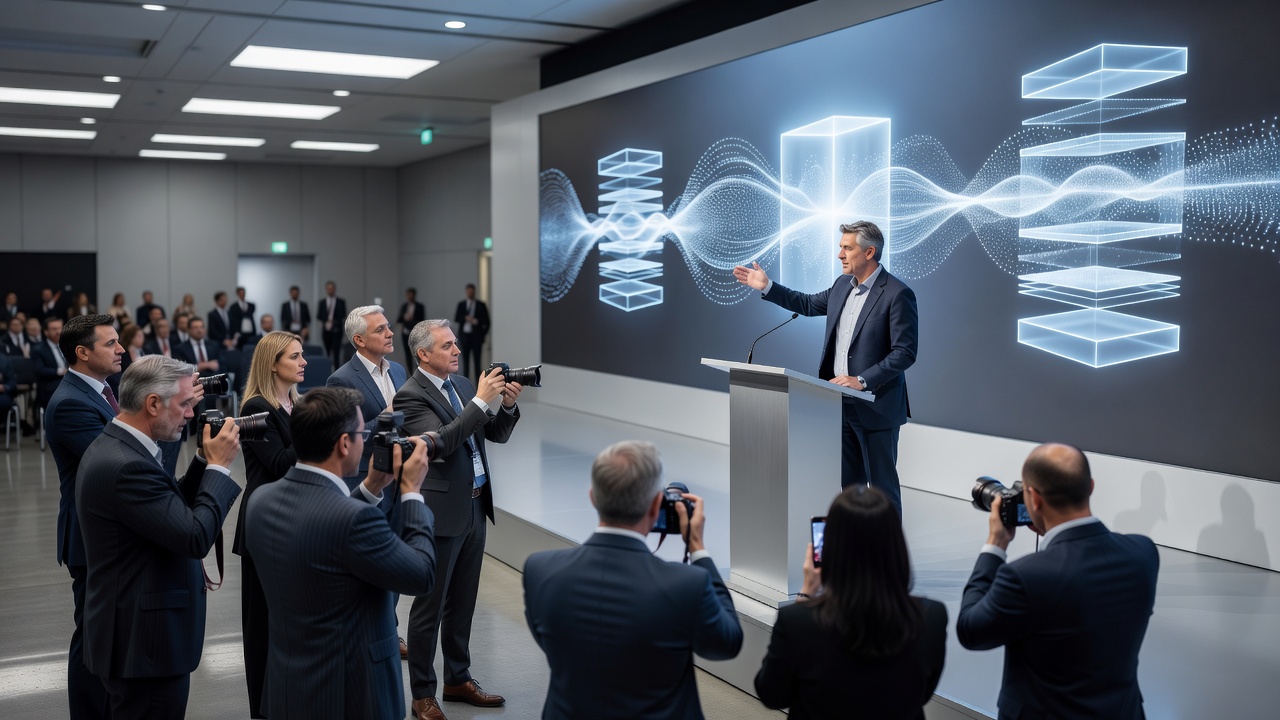
The International Conference on Light Field Research held in Berlin last week showcased a major advance in data compression for light field imagery. Researchers from Lichtfeld Light Field Research introduced an algorithm achieving up to 90 percent file size reduction while preserving essential angular and spatial information critical for accurate reconstruction.
Technical Innovations
The technique integrates wavelet-based transforms with neural network predictors optimized for the four-dimensional structure of light fields. Unlike conventional codecs such as JPEG or HEVC that introduce parallax artifacts and degrade depth cues, the new approach maintains over 95 percent perceptual quality measured by SSIM across multiple plenoptic camera datasets. Real-time decoding performance was demonstrated on standard hardware, supporting interactive viewing in virtual reality headsets and glasses-free 3D displays. Additional tests confirmed robustness under varying illumination and scene complexity, addressing previous limitations in high-dynamic-range content handling.
Implementation details include adaptive quantization of angular views and predictive coding between neighboring rays to exploit redundancy inherent in light field captures. The method outperforms existing light field specific compressors by a factor of two in bitrate efficiency according to independent benchmarks presented at the event.
Future Applications and Impact
Industry observers noted that lower bandwidth demands could enable widespread streaming of light field video over current internet infrastructure, accelerating adoption in consumer devices and professional production pipelines. An open-source release of the codec is scheduled before year end to encourage collaborative development and standardization efforts.
Conference participants highlighted remaining challenges in dynamic scene encoding and integration with emerging display technologies yet expressed strong confidence that the presented work represents a pivotal milestone. Continued support through European research initiatives will focus on further optimizations and extensive field trials across diverse capture conditions.